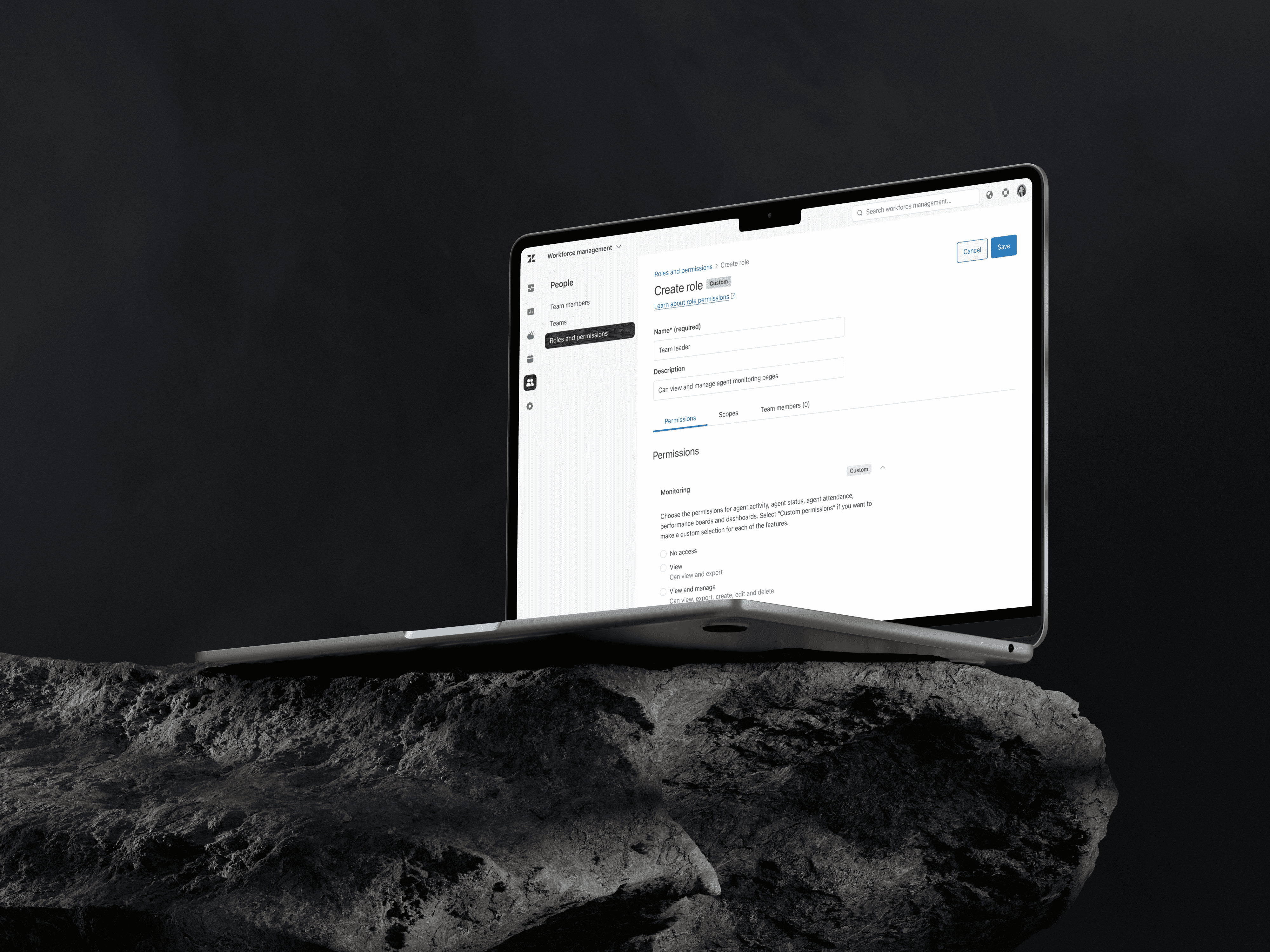
WFM Light
A Product-Led Growth initiative designed to boost new customer acquisition and drive penetration metrics.
Role
Product Designer
Company
Zendesk
Timeline
10 weeks
Starting point
Workforce Management (WFM) served roughly 15% of eligible Zendesk customers, representing a large gap against a real addressable market.
The objective: increase WFM penetration among Zendesk Suite customers with 50+ seats from 15% to 23%. The bet was to introduce a lightweight, free version of one of WFM's core features: real-time agent activity tracking-directly inside the product, giving customers a taste of the value before asking them to upgrade.
Journey
The initial vision was to embed a full agent-activity dashboard inside Zendesk Analytics, built on Looker. Mapping the user flow surfaced a hard technical ceiling: Looker could render a maximum of 800 data blocks per view, while a single agent generates roughly 100 activity blocks per shift. For an enterprise customer with 3,000 global agents, real-time tracking at that scale simply wasn't renderable. This wasn't a polish problem; it broke the premise of the feature. Looker's rigid UI also broke visual consistency with the rest of WFM, which mattered strategically: if the free preview didn't look like the product customers would pay for, it weakened the upsell case we were building toward.
I rejected the Looker-based approach and proposed a simplified version of the Agent Activity page built natively inside the WFM product-the same interface customers would land in after upgrading. This removed the technical ceiling, gave us a faster and cheaper build, and meant new users were learning the real product from day one, not a stripped-down analytics widget.
Real-time tracking of agent activity also raised a question before it raised a UX one: did customers have the right to turn this on for their teams without explicit consent? Zendesk's legal team required active opt-in before any tracking could begin, so I designed onboarding around an opt-in pattern: customers explicitly enable "Track agent activity" with a plain-language explanation of what's collected, before any data flows.
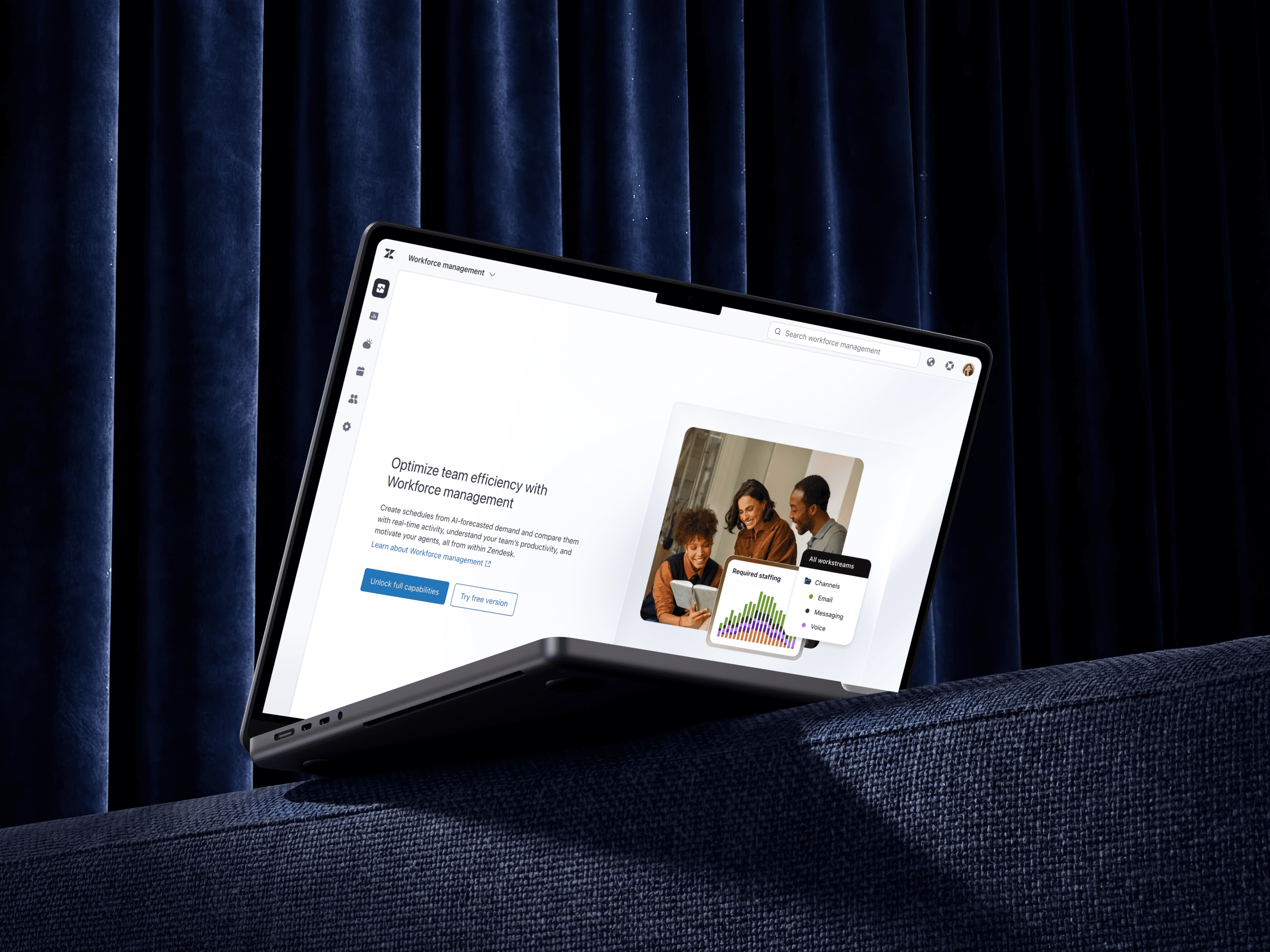
From there, the design work centered on three core objectives. First, to make the upsell tangible, locked capabilities remained visible directly within the interface customers were already using, gated by an in-context "Available in full version" prompt. Second, to keep the funnel native, entry points were embedded directly inside high-traffic Zendesk surfaces rather than routed through a separate marketing page, ensuring the "sign-up or upgrade" prompt appeared precisely where value was being felt. Finally, to drive strategic cross-functional alignment, I partnered closely with PMM to shape launch messaging, select content formats, and determine optimal promotional channels. Additionally, I worked with Product and Engineering to track conversion and eliminate post-launch friction.

Outcome
The feature drives ~300 new monthly sign-ups, establishing a steady top-of-funnel for the full WFM add-on.
The technical constraint wasn't a blocker to design around-it was the input that shaped the right strategy. Building natively, inside the product, turned out to be both the feasible solution and the stronger growth lever, because it let the free tier double as a live preview of the paid product.